FDA Hormone Therapy Warning Update: New HRT Guidelines


Empowered doctor-patient consultations guide modern personalized hormone therapy decisions.
Key Takeaways
- The FDA's removal of black-box warnings for breast cancer, heart disease, and dementia marks a return to evidence-based, individualized care for menopausal wellness.
- The timing hypothesis demonstrates that initiating systemic hormone therapy within ten years of menopause onset or prior to age sixty offers an optimal safety and benefit profile.
- Regulators have eliminated the blanket directive of prescribing only for the shortest duration, shifting treatment lengths toward collaborative patient-provider choices.
- Safety safeguards remain intact: the boxed warning for endometrial cancer remains active for unopposed systemic estrogen in individuals with a uterus.
- Endocrine protocols perform best when supported by a metabolic foundation emphasizing cruciferous vegetables, dietary fiber, and blood sugar balance.
FDA Removes Black-Box Warnings from Hormone Therapy: What It Means for Patients
For more than two decades, a cloud of apprehension has hung over women navigating perimenopause and menopause. Many who sought relief from disruptive hot flashes, brain fog, and chronic sleep disruptions were met with alarming warning labels on their prescription boxes. The formidable “black box”—the highest safety alert issued by the Food and Drug Administration (FDA)—warned of potential risks involving cardiovascular disease, breast cancer, and cognitive decline.
That narrative has shifted dramatically. Following an exhaustive evaluation of scientific literature and expert consensus panels, the FDA approved landmark label updates to systemic hormone replacement therapy products, initiating the removal of broad black-box warnings regarding cardiovascular events, breast cancer, and dementia.
This historic policy update helps correct decades of medical hesitation rooted in the original 2002 Women’s Health Initiative (WHI) trials. If you have felt overwhelmed, confused, or cautious about navigating your midlife transition, understanding this hormone therapy FDA warning update is essential. Below, we break down what the scientific updates actually mean, examine the revised HRT safety guidelines, and explore how integrating lifestyle and nutritional strategies can support your endocrine health.
Key Takeaways at a Glance
- Historic Label Revision: The FDA initiated the removal of broad black-box warnings for breast cancer, heart disease, and dementia from systemic menopausal hormone therapy formulations.
- The “Timing Hypothesis”: Updated agency guidance highlights that initiating hormone support within ten years of menopause onset or before age sixty generally reflects a more favorable benefit-to-risk profile.
- Removal of Restrictive Duration Language: Labels are moving away from the rigid dogma of “lowest dose for the absolute shortest duration,” allowing for tailored, long-term conversations between individuals and clinicians.
- Retained Specific Warnings: The boxed warning concerning endometrial safety for systemic estrogen-alone therapy in individuals with an intact uterus remains firmly in place.
- Metabolic Foundation: Endocrine balance functions best in tandem with nutrient-dense nourishment, liver health optimization, and tailored lifestyle routines.
The 2002 Women’s Health Initiative: Why the Warnings Were Placed
To understand why the removal of these labels is significant, we have to look back at 2002. That year, preliminary findings from the Women’s Health Initiative (WHI) trial were released to the public. Headwinds of anxiety quickly followed headlines claiming that hormone therapy carried severe risks of heart attack, stroke, and invasive breast cancer.
Almost overnight, prescriptions plummeted by more than half. Tens of millions of individuals abruptly stopped hormone support or decided against starting it, enduring severe vasomotor symptoms and bone mineral density loss in silence.
+---------------------------------------------------------------------------------+
|                       THE 2002 WHI PARADOX AT A GLANCE                          |
+---------------------------------------------------------------------------------+
| WHAT HAPPENED:                                                                  |
| • Heavily publicized warnings linked HRT to heart attacks, stroke, & dementia.  |
|                                                                                 |
| THE CRUCIAL FLAWS IDENTIFIED IN MODERN RE-ANALYSIS:                             |
| • Demographics: Average participant age was over 63 (many well past menopause). |
| • Regimen: Focused predominantly on oral Premarin & medroxyprogesterone.       |
| • Generalization: Risks in older participants were applied to 40-50 year olds.  |
+---------------------------------------------------------------------------------+
In my experience reviewing hormone wellness research and patient experiences, the fundamental flaw of the early 2000s narrative was applying broad assumptions to all age groups and formulations. The average age in the primary WHI cohort was over sixty-three years old, and many participants possessed pre-existing cardiovascular risk factors.
Subsequent re-analyses over the past fifteen years confirmed that starting hormone therapy early in the menopausal transition creates a biological response completely distinct from starting it decades after ovarian hormone production has ceased.
[PRO-TIP: When reviewing scientific studies on hormone balance, always inspect the age group and delivery method evaluated. What applies to an oral synthetic compound in a seventy-year-old rarely applies to a transdermal physiological option in a forty-eight-year-old.]
Decoding the Landmark Decision: What Did the FDA Change?
The FDA’s decision, coordinated alongside the Department of Health and Human Services (HHS), seeks to align drug labeling with modern evidence-based clinical consensus.
What Has Been Removed or Revised?
- Removal of Broad Black-Box Warnings: Systemic formulations across four primary classes (combined estrogen-progestogen, estrogen alone, other estrogen-containing, and progestogen-only products) are having their black-box warnings removed for breast cancer, cardiovascular disease, and probable dementia.
- Elimination of Arbitrary Duration Restrictions: Regulators have moved to phase out prescriptive warnings dictating that HRT must strictly be used at the “lowest effective dose for the shortest possible duration.” Instead, modern recommendations emphasize individual clinical decisions based on symptom management and quality-of-life goals.
- Specific Clarification on Local Therapies: Safety data for low-dose vaginal estrogens have been clarified to reflect their localized nature and minimal systemic absorption.
What Remains on the Label?
- Endometrial Safety for Estrogen Monotherapy: The boxed warning highlighting the risk of endometrial cancer when systemic estrogen is taken without a counter-balancing progestogen in women with an intact uterus remains active. Unopposed estrogen can stimulate endometrial proliferation, which is why practitioners pair estrogen with progesterone for uterine protection.
- Individual Risk Factors: Warnings continue to advise thorough evaluations for individuals with a personal history of hormone-receptor-positive cancers, active liver disease, or certain thrombotic conditions.
The “Timing Hypothesis” and Modern HRT Safety Guidelines
A cornerstone of the modernized HRT safety guidelines is the recognition of what endocrinologists refer to as the “window of opportunity” or the timing hypothesis.
Data demonstrates that systemic hormone therapy provides the clearest benefits when initiated:
- Within 10 years of menopause onset, or
- Before reaching 60 years of age.
HORMONE THERAPY SAFETY WINDOW:
[ Perimenopause / Early Menopause ] ---> Optimal Benefit-Risk Profile
         (Ages 45 - 59)
------------------------------------------------------------------------
[ Late Menopause Transition ]      ---> Requires Careful Cardiovascular Screening
         (Ages 60+)
During this biological window, vascular endothelial tissue is typically more receptive to estrogens. Research indicates that when initiated within this window, hormone therapy may support bone mineral preservation, assist in reducing fracture incidence by fifty to sixty percent, and help balance lipid metabolism. Conversely, initiating systemic hormone therapy decades after menopause onset, when arterial walls may have already developed calcification, does not confer the same protective profile.
Exploring Routes of Administration: Transdermal, Oral, and Bioidentical Options
Not all hormone therapies interact with the human body in identical ways. The dialogue around menopause hormone therapy risks is deeply tied to the route of administration.

1. Transdermal Options (Patches, Gels, and Sprays)
Many contemporary clinicians frequently consider transdermal estradiol. Because transdermal options absorb directly through the skin into the bloodstream, they bypass the “first-pass” metabolism of the liver.
- By bypassing hepatic processing, transdermal estradiol generally does not stimulate clotting factors or elevate C-reactive protein (an inflammatory marker).
- This makes transdermal methods an attractive option for individuals seeking to support vascular well-being.
2. Oral Formulations
Oral estrogens must travel through the digestive tract and liver, which can elevate sex hormone-binding globulin (SHBG) and alter clotting cascades. While modern oral therapies remain valuable and effective for many, their metabolic pathway differs substantially from topical delivery.
3. Bioidentical Hormone Replacement (Body-Identical)
The popularity of bioidentical hormone replacement has surged over the past decade. The term generally refers to hormones that are molecularly identical to those produced naturally by the human ovaries:
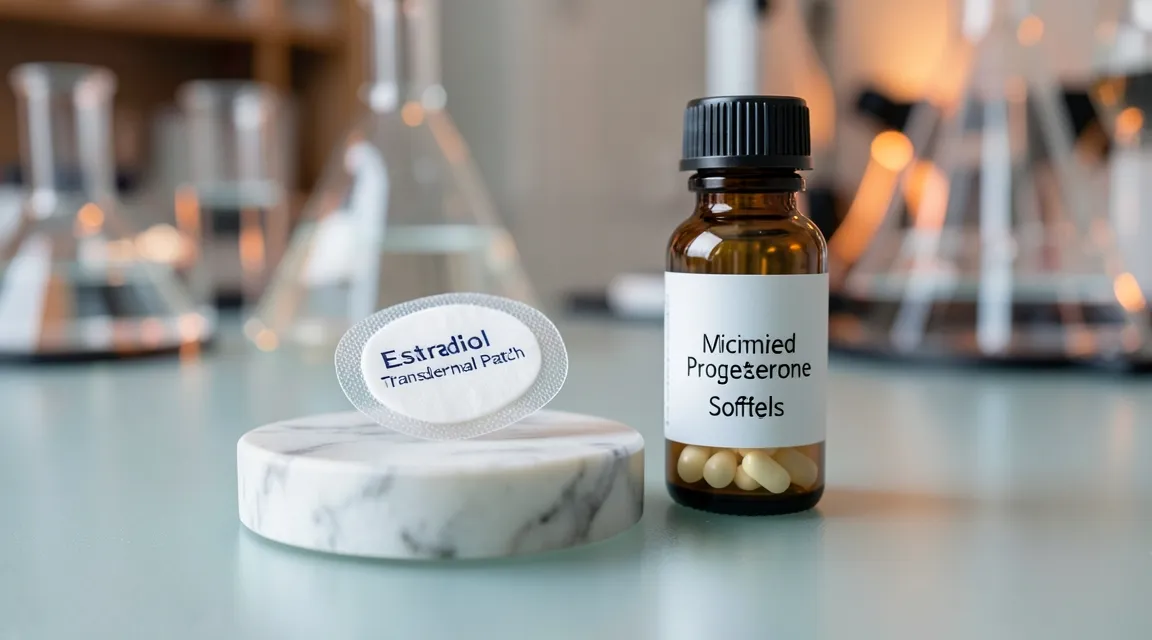
- 17β-Estradiol: Chemically identical to human ovarian estrogen, available in FDA-approved transdermal and oral forms.
- Micronized Progesterone: A natural progesterone suspended in oil that interacts favorably with GABA receptors in the brain, which may support restorative sleep patterns without the metabolic side effects occasionally associated with older synthetic progestins.
[PRO-TIP: Always differentiate between FDA-approved bioidentical hormones available at regular retail pharmacies and custom-compounded preparations. FDA-approved bioidenticals undergo standardized manufacturing and consistent potency testing.]
Foundational Metabolic and Dietary Strategies for Hormone Harmony
Pharmacological tools function most effectively when layered onto a robust lifestyle and metabolic foundation. Estrogens and progesterone do not exist in a vacuum—they cross-communicate constantly with insulin, cortisol, and thyroid pathways.
       +---------------------------------------------+
       |       THE TRIAD OF HORMONE METABOLISM       |
       +---------------------------------------------+
                              |
       +----------------------+----------------------+
       |                      |                      |
[ LIVER CLEARANCE ]    [ GUT MICROBIOME ]     [ INSULIN BALANCE ]
Cruciferous veggies,   Adequate prebiotic     Whole-food carbs,
DIM, sulfur-rich foods fiber, estrobolome     healthy fats, and
aid estrogen breakdown  balances reabsorption  regular resistance
and safe pathways.     and excretion.         training routines.
To create an environment where your endocrine system can thrive, consider incorporating the following dietary principles:
1. Supporting Liver Estrogen Detoxification
Once the body utilizes estrogen, it must be metabolized by the liver through Phase I and Phase II pathways, transforming into gentle, protective metabolites rather than reactive forms.
- Incorporate Cruciferous Vegetables: Broccoli, cauliflower, Brussels sprouts, and arugula are rich in indole-3-carbinol (I3C) and sulforaphane, compounds known to support optimal estrogen clearance.
- Sulfur-Rich Foods: Garlic, onions, and pastured eggs provide methionine and cysteine, which support the liver’s methylation and sulfation pathways.
2. Optimizing the “Estrobolome”
The estrobolome is a specific subset of bacteria in your gut microbiome responsible for regulating whether estrogen is safely excreted in the stool or deconjugated and reabsorbed into circulation.
- Prioritize Dietary Fiber: Aim for thirty grams of diverse dietary fiber daily from chia seeds, ground flaxseeds, berries, and legumes to bind excess metabolites in the bowel.
- Polyphenols: Pomegranate seeds, green tea, and dark berries deliver plant compounds that nurture beneficial gut bacteria like Akkermansia muciniphila.
3. Stabilizing Glucose Dynamics
Fluctuating insulin levels can exacerbate hot flashes and perturb the adrenal system, encouraging excess cortisol production.
- Anchor Meals with Protein: Aim for twenty-five to thirty-five grams of high-quality protein per meal to maintain satiety and moderate postprandial glucose excursions.
- Pair Carbohydrates Mindfully: Combine complex starches with healthy fats (such as extra virgin olive oil, nuts, or avocado) to smooth your glycemic curves.
When chronic stress and shifting estrogen levels cause unpredictable fluid retention and stubborn belly tension, addressing your adrenal health becomes just as vital as balancing sex hormones. If stubborn midsection puffiness and stress-driven fluid retention are clouding your progress, implementing targeted daily nutrition strategies through The Cortisol Bloat Reset Guide offers an empathetic, step-by-step roadmap to calm adrenal fatigue and reclaim abdominal ease.

Navigating the Decision: Questions to Bring to Your Doctor
The removal of the FDA black-box warning does not suggest that every woman should automatically start hormone replacement. Rather, it grants permission for nuanced, individualized healthcare conversations untainted by outdated fears.

If you are experiencing perimenopausal or postmenopausal shifts, consider bringing the following roadmap of questions to your next appointment:
- “Based on my personal and family history, am I an appropriate candidate for systemic hormone support?”
- “Would a transdermal route offer metabolic advantages over an oral formulation for my lipid and vascular profile?”
- “If I take estrogen, what is the best strategy to protect my uterine lining—such as micronized progesterone?”
- “How do our chosen options align with the ten-year window of menopause onset?”
- “What baseline markers (fasting insulin, comprehensive lipid panel, bone density scans) should we track along the way?”
Remember: This material is intended for educational purposes and should not substitute for professional medical counsel. Every human physiology responds differently, and therapeutic strategies must be personalized under the guidance of a qualified healthcare provider.
Conclusion: Stepping Into an Era of Informed Choice
The FDA’s updated labeling for menopausal hormone therapy marks a critical milestone in women’s healthcare. By moving past the generalized panic of 2002 and adopting science-backed nuances, patients and clinicians can finally make choices based on rigorous evidence rather than reflexive fear.
Hormone replacement therapy is neither a universal fountain of youth nor an inevitable danger. It is an established, valuable clinical tool that—when applied during the appropriate biological window, utilizing modern transdermal and body-identical formulations, and paired with nourishing metabolic habits—can help optimize vitality, sleep, and skeletal strength for decades to come.
Your immediate next step? Keep a seven-day journal tracking your sleep quality, temperature changes, and energy levels. Use those tangible observations to initiate an empowered, informed dialogue with your healthcare provider.
Frequently Asked Questions
Did the FDA say hormone therapy is risk-free?
No medical therapy is entirely without risk. The FDA’s revision clarifies that previously exaggerated warnings regarding cardiovascular disease, breast cancer, and dementia were based on skewed interpretations of older clinical cohorts. It removes the blanket black-box alerts while preserving important safety advisories, such as the need to balance systemic estrogen with progesterone to protect the uterine lining.
What is the difference between synthetic and bioidentical hormones?
Synthetic hormones (such as conjugated equine estrogens or medroxyprogesterone acetate) are structurally different from human hormones, which can result in distinct metabolic and receptor-binding effects. Bioidentical (or body-identical) hormones, such as 17β-estradiol and micronized progesterone, have the exact molecular architecture as the hormones synthesized naturally by your ovaries.
What happens if I have an intact uterus and want to use estrogen?
If you have a uterus, clinical standards require pairing systemic estrogen with a progestogen (such as micronized progesterone). Taking unopposed systemic estrogen can lead to abnormal thickening of the endometrium, which carries an established risk of endometrial cancer. The FDA retained this specific boxed warning for patient safety.
How does nutrition interact with hormone therapy?
Nutrition supports how effectively your body processes and eliminates hormones. A diet rich in cruciferous vegetables, soluble and insoluble fiber, and lean protein provides the nutrients necessary for liver detoxification (Phase I and II metabolism) and maintains a healthy estrobolome in the gut, helping balance circulating hormone levels.
Is transdermal estrogen safer for the cardiovascular system than oral pills?
Research suggests that transdermal estradiol (applied via patches, gels, or sprays) does not pass directly through the liver, meaning it is far less likely to elevate inflammatory markers or blood clotting proteins compared to oral estrogens. Many specialists prefer transdermal delivery for individuals with mild cardiovascular or metabolic risk factors.
Frequently Asked Questions (FAQ)
Did the FDA say hormone therapy is risk-free?
No intervention is completely without risk. The FDA updated its stance to reflect that broad black-box warnings for cardiovascular disease, breast cancer, and dementia were rooted in outdated analyses of older cohorts. While these warnings were removed, individualized risk evaluations remain essential.
What is the difference between synthetic and bioidentical hormones?
Synthetic options often differ subtly in molecular shape from human hormones, influencing how they bind to receptors. Bioidentical (body-identical) formulations, such as 17β-estradiol and micronized progesterone, match the precise molecular structure of the hormones naturally synthesized by the human body.
What happens if I have an intact uterus and want to use estrogen?
When taking systemic estrogen with an intact uterus, clinicians routinely prescribe a concurrent progestogen (like micronized progesterone). Unopposed systemic estrogen can lead to endometrial hyperplasia; hence, the FDA has firmly retained the boxed warning regarding uterine protection.
How does nutrition interact with hormone therapy?
Dietary habits support the body's internal clearance mechanisms. Soluble fibers and cruciferous vegetables (rich in indole-3-carbinol) support Phase I and II liver detoxification and nourish the gut microbiome to facilitate safe hormone breakdown and metabolic harmony.
Is transdermal estrogen safer for the cardiovascular system than oral pills?
Evidence suggests that transdermal estradiol (delivered through patches, gels, or creams) bypasses first-pass liver metabolism. This characteristic helps prevent increases in blood-clotting factors, often giving it a more favorable vascular profile than oral alternatives.